
Business cooling · Brisbane & Moreton Bay
Commercial Air Conditioning Service & Maintenance Schedule
A commercial air conditioning maintenance schedule should identify the equipment, tasks, responsible people and review triggers. It must account for manufacturer instructions, operating hours, site conditions and applicable building obligations. A calendar reminder alone is not a maintenance plan, and one universal interval does not suit every business.
Hart Air ·
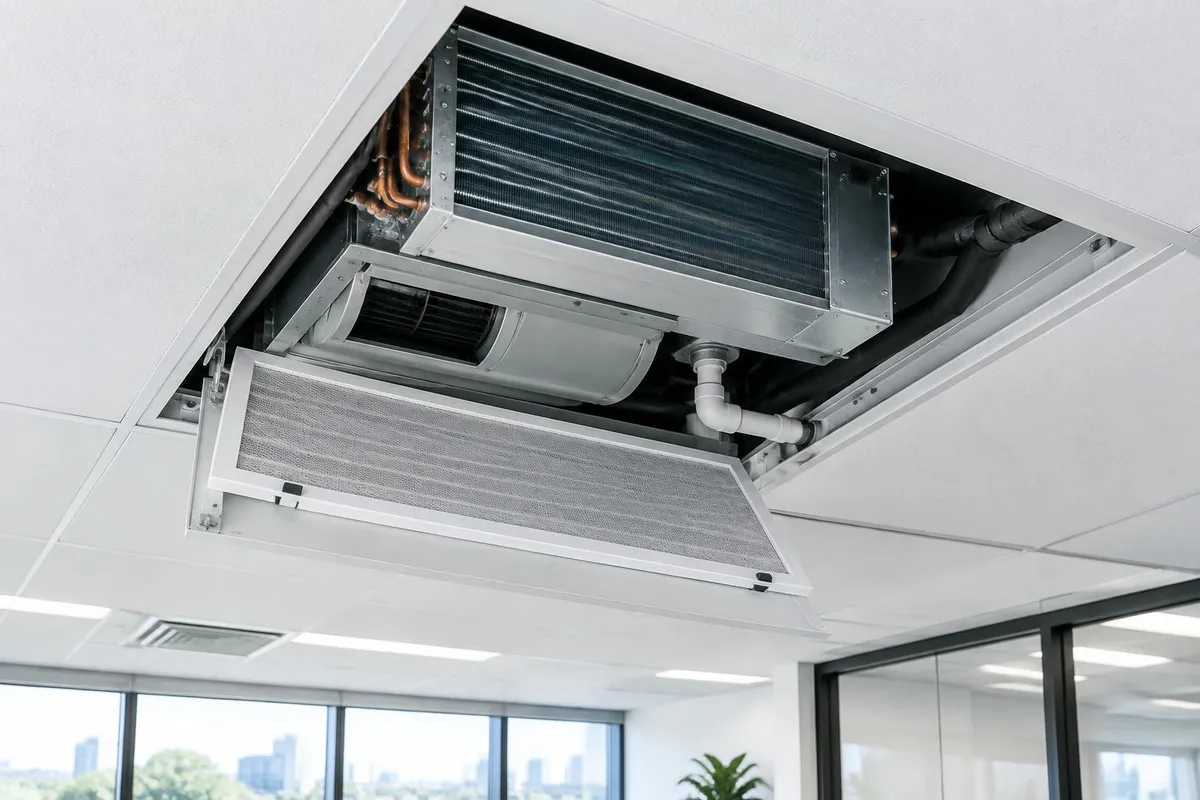
Build a commercial air conditioning maintenance schedule
Create an asset register first: location, model, serial number, installation date where known, refrigerant, controller and the rooms served. Link each asset to its operating manual, service history and access requirements. Record which equipment belongs to the landlord and which belongs to the tenant.
Then define tasks, frequency, responsibility and the record to be kept. Choose intervals from the relevant instructions and obligations, with site-specific adjustments agreed by competent people. Longer operating hours, dust, grease, coastal exposure or previous drain failures can justify a different plan from a lightly used office.
Explore commercial air conditioning services in Brisbane and Moreton Bay, or see book air conditioning servicing in brisbane.
Separate operator observations from technician work
Staff can report comfort problems, unusual noise, water leaks and fault codes without opening equipment. Filter care may be an operator task only where the manual permits it and safe access and training are available. Do not assign a receptionist or shop worker a task that requires ladders, roof access, electrical isolation or exposure to moving parts.
Internal coil cleaning, electrical testing, refrigerant work and tasks around guarded fans require suitable competence and safety controls. Refrigerant handling needs the appropriate authorisation. A maintenance checklist is not a do-it-yourself repair procedure; equipment should be made safe before internal work.
- Record room, time, mode and fault code when a problem occurs.
- Keep accessible grilles and designated plant access clear.
- Report leaks or recurring trips instead of repeatedly resetting equipment.
- Follow approved filter instructions; leave inaccessible equipment to technicians.
Australian Refrigeration Council — handling licence and trading authorisation
Define the service tasks and evidence
A technician scope can include filter condition, coil fouling, fans, drains, condensate pumps, insulation, corrosion and controller operation, as applicable to the equipment. The report should identify completed tasks, defects, recommended actions and any parts requiring follow-up, not simply say 'serviced'.
Operating pressures alone do not prove a system is leak-free. Suspected refrigerant loss needs suitable investigation and rectification rather than an unexplained top-up. Record work on refrigerant circuits and distinguish diagnostic checks from repairs that require additional approval. Ask how urgent defects will be communicated and who authorises the follow-up.
Planning work at your premises?
Send your address, equipment details and operating hours so suitability and scope can be confirmed.
AS/NZS 3666 and building obligations
The AS/NZS 3666 series addresses microbial control in building air-handling and water systems. Its relevance, applicable parts and any required tasks depend on the system and the requirements that apply to the building. This is not evidence that every commercial wall split has an identical legally required quarterly service.
Cooling towers, fire and smoke systems, specialist healthcare areas and ordinary tenancy comfort cooling have different considerations. Ask the building owner, responsible designer or relevant specialist to identify obligations from the applicable documents and legislation. Do not rely on this overview as a substitute for access to the standards or a formal compliance determination.
Review the plan when conditions change
Use service findings to refine the schedule. If filters repeatedly block before the planned visit, investigate the source and review the interval and filtration arrangement. If drains overflow, inspect the cause and access rather than merely adding more calendar visits. Changes in tenancy layout, occupancy or operating hours can also affect equipment and ventilation requirements.
Check access before peak trading periods and agree how faults will be handled when an area cannot be shut down. Maintenance reduces avoidable deterioration but does not guarantee fault-free operation. Critical rooms may need a separate contingency plan, alarms or specialist equipment assessment.
Keep useful maintenance records
Keep dated reports, asset identifiers, filter instructions, repair approvals and relevant commissioning information in a place the site manager can access. Track outstanding defects to closure. Clear records help a new technician understand recurring faults and let the owner see whether quoted work has been completed.
AIRAH's published maintenance schedules are a planning reference, not a substitute for current project requirements. The document calls for experienced personnel to prepare project-specific schedules and to check manufacturer instructions and local statutory requirements. When booking Hart Air, send equipment details, service history and access restrictions, then agree the equipment and tasks covered.
AIRAH DA19 Appendix A — maintenance planning reference (PDF, 2019)
Maintenance planning worksheet — intervals must be confirmed for the site
| Task group | Set the interval using | Keep this record |
|---|---|---|
| Operator observations | Site procedures and equipment instructions | Comfort complaints, faults and leaks |
| Filter care | Manual, condition, safe access and exposure | Condition and cleaning/replacement date |
| Technical servicing | Equipment instructions, risks and service findings | Tasks, measurements, defects and actions |
| Building compliance tasks | Applicable building documents and obligations | Required tests and specialist reports |
Before you repair, replace or upgrade
Check who is responsible under the lease
Commercial leases often set out who arranges servicing, repairs and replacement. The Queensland Small Business Commissioner's repairs and maintenance guidance explains how these obligations are commonly allocated between landlord and tenant.
Repair or replace older equipment
Weigh the fault, equipment age, repeat breakdowns, parts availability and running costs. Older systems using R22 refrigerant, an ozone-depleting gas, need particular care: refrigerants are not automatically interchangeable, and gas must be recovered rather than released.
Confirm licensed refrigerant work
Refrigerant handling requires appropriate Australian Refrigeration Council authorisation, and some installation scopes need a QBCC licence. Ask for licence details before work is booked. See our guide to choosing a commercial AC contractor.
Plan around trading hours
Tell us your opening hours, critical rooms and access restrictions so inspections, servicing or changeovers in Brisbane can be scheduled with minimal disruption. Read the commercial maintenance schedule guide.
Frequently asked questions
Official references
- Australian Refrigeration Council — handling licence and trading authorisation
- National Construction Code — building requirements
- AIRAH DA19 Appendix A — maintenance planning reference (PDF, 2019)
General planning information, not a site-specific design, compliance determination or fixed quote. Confirm current requirements with the responsible building professionals and equipment instructions.
Related commercial guides
- Commercial Air Conditioning: VRF vs Ducted vs Split
Compare commercial air conditioning options: VRF, ducted and split systems, zoning, ventilation and access.
- Commercial Air Conditioning Energy Efficiency & NABERS
Improve commercial air conditioning energy efficiency in Brisbane with controls, maintenance and measurement.
- Choosing a Commercial Air Conditioning Contractor in Queensland
Choose a commercial air conditioning contractor in Queensland: check licence scope, design responsibility, quotes and handover.
Discuss your commercial air conditioning project
Tell Hart Air about your premises, existing system and proposed work. Attendance and specialist-system scope are confirmed before booking.