
Business cooling · Brisbane & Moreton Bay
Choosing a Commercial Air Conditioning Contractor in Queensland
Choosing a commercial air conditioning contractor in Queensland means checking the licence scope and the exact work being offered, not just a logo on a van. Refrigerant handling, mechanical services, electrical work and design responsibility are related but different matters. Confirm who will perform each part and what the quotation includes.
Hart Air ·
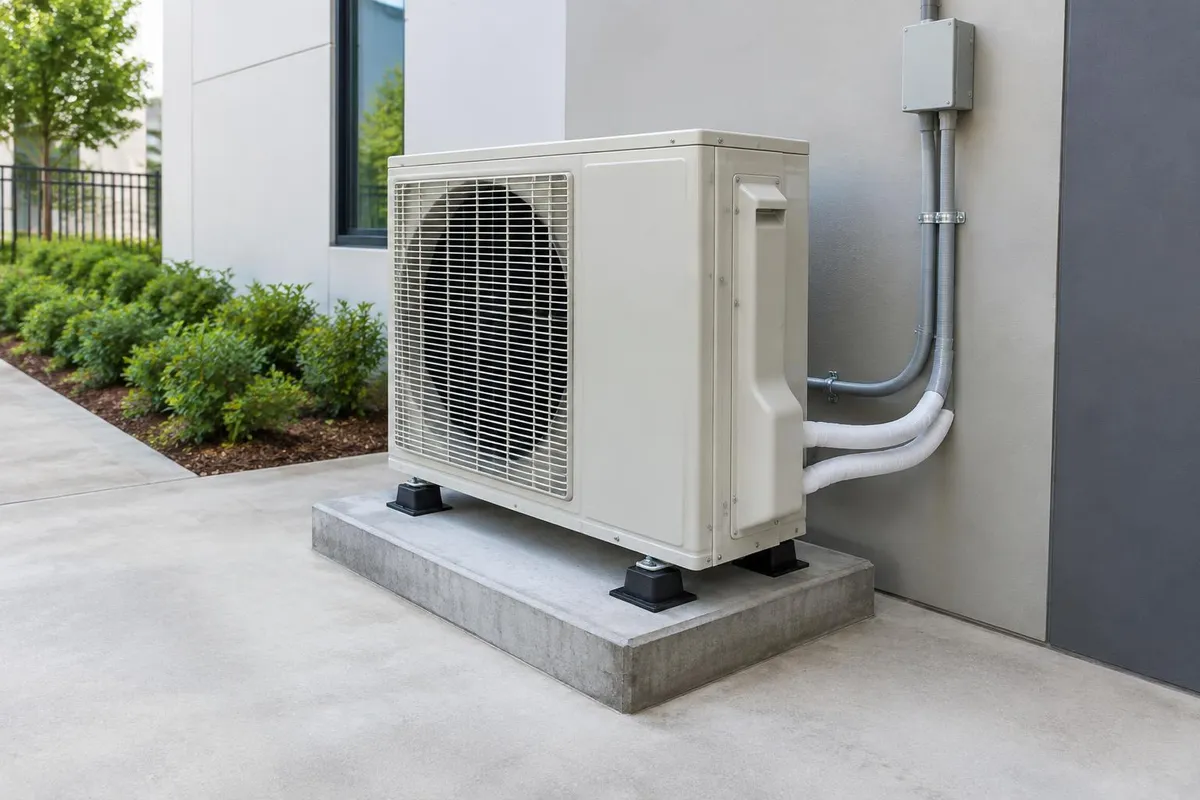
Check the commercial contractor's Queensland licence scope
Ask for the contractor's legal entity and relevant QBCC licence details, then check current status and scope through the official information and registers. Queensland mechanical services air conditioning and refrigeration work has different licence classes and responsibilities. A licence should match the work and role, including any design responsibility being accepted.
Do not assume a company name, an advertisement or experience with domestic splits establishes capability for a larger commercial system. Ask how the proposed work fits the licence scope and whether specialist design or subcontracting is involved. Resolve unclear responsibility before accepting the quotation.
QBCC — mechanical services licence scope (limited design)
Explore commercial air conditioning services in Brisbane and Moreton Bay, or see discuss your commercial project with hart air.
Refrigerant authorisation is a separate check
Personnel performing regulated refrigerant work need the appropriate refrigerant handling authorisation. Business authorisation for acquiring, storing or disposing of refrigerant is a separate consideration under the relevant scheme. An ARC licence is not a replacement for every other mechanical, electrical or building-work requirement.
Ask who will recover refrigerant, investigate leaks, charge equipment and complete the relevant records. Electrical work also needs the appropriate licensing arrangements. A single general statement that the team is 'fully licensed' is less useful than confirming the people and responsibilities for the actual scope.
Australian Refrigeration Council — handling licence and trading authorisation
Clarify who designs and coordinates the job
The quote should identify who determines heat loads, equipment selection, ventilation interfaces and controls. Larger or more complex sites may need a specialist mechanical designer and input from other building professionals. Make sure the design brief includes intended occupancy, operating hours and the proposed fit-out.
Ask who coordinates landlord approval, roof access, structural supports, fire-related interfaces, electrical supply and penetrations where they apply. If these are excluded, identify the person who will arrange them. Gaps between contractors can create cost and programme problems even when each individual quotation seems clear.
Planning work at your premises?
Send your address, equipment details and operating hours so suitability and scope can be confirmed.
Ask for an itemised and comparable quotation
Compare equipment models, zones, controls and installation assumptions rather than headline totals. A quote should state included work, exclusions, GST treatment, access assumptions and the variation process. Record how unexpected defects in existing infrastructure will be handled before work begins.
Confirm insurance arrangements appropriate to the work and ask for relevant project experience without treating an unverified testimonial as technical evidence. A contractor should be able to explain why the proposed system suits the brief and what limitations or alternatives were considered.
- Legal entity, licence class and current status.
- Design responsibility and specialist subcontractor scope.
- Equipment schedule and included building-service work.
- Access, approvals, exclusions and variation process.
- Insurance, commissioning, warranty and maintenance terms.
Commissioning and handover belong in the scope
Ask which operating checks, balancing, control tests and commissioning records will be provided for the installation. Requirements vary with the equipment and project, so a generic 'tested and working' line may not explain enough. Handover should help the operator understand schedules, zones, alarms and safe routine care.
Obtain manuals, warranty information, model details and a record of any outstanding items. Agree who handles defects and how the site reports problems. Manufacturer warranty conditions and workmanship terms should be supplied in writing; do not assume all brands or contractors use the same conditions.
Confirm ongoing support and specialist capability
Check how servicing will be arranged and whether safe access has been designed into the installation. Ask about parts availability, fault reporting and the process for urgent attendance without assuming a guaranteed response time. Equipment critical to a process may need a separate contingency plan.
When enquiring with Hart Air, describe the building, existing system and proposed work. Confirm suitability and availability, particularly for VRF, cassettes, packaged plant or specialist ventilation interfaces. This procurement guide is not a claim that every commercial system or design discipline is included in Hart Air's service scope.
Appointment checklist for a Queensland commercial cooling project
| Check | Confirm in writing |
|---|---|
| Licensing | Current entity, class, scope and relevant personnel |
| Design | Who owns loads, selection and coordination |
| Quotation | Models, inclusions, exclusions and variations |
| Handover | Commissioning records, manuals and support arrangements |
Before you repair, replace or upgrade
Check who is responsible under the lease
Commercial leases often set out who arranges servicing, repairs and replacement. The Queensland Small Business Commissioner's repairs and maintenance guidance explains how these obligations are commonly allocated between landlord and tenant.
Repair or replace older equipment
Weigh the fault, equipment age, repeat breakdowns, parts availability and running costs. Older systems using R22 refrigerant, an ozone-depleting gas, need particular care: refrigerants are not automatically interchangeable, and gas must be recovered rather than released.
Confirm licensed refrigerant work
Refrigerant handling requires appropriate Australian Refrigeration Council authorisation, and some installation scopes need a QBCC licence. Ask for licence details before work is booked. See our guide to choosing a commercial AC contractor.
Plan around trading hours
Tell us your opening hours, critical rooms and access restrictions so inspections, servicing or changeovers in Brisbane can be scheduled with minimal disruption. Read the commercial maintenance schedule guide.
Frequently asked questions
Official references
- QBCC — mechanical services licence scope (limited design)
- Australian Refrigeration Council — handling licence and trading authorisation
- National Construction Code — building requirements
General planning information, not a site-specific design, compliance determination or fixed quote. Confirm current requirements with the responsible building professionals and equipment instructions.
Related commercial guides
- Commercial Air Conditioning Costs Brisbane
Compare commercial air conditioning costs in Brisbane by equipment, access, electrical work and commissioning.
- Commercial Air Conditioning: VRF vs Ducted vs Split
Compare commercial air conditioning options: VRF, ducted and split systems, zoning, ventilation and access.
- Commercial Air Conditioning Service & Maintenance Schedule
Plan a commercial air conditioning maintenance schedule around equipment, site risks and manufacturer instructions.
Discuss your commercial air conditioning project
Tell Hart Air about your premises, existing system and proposed work. Attendance and specialist-system scope are confirmed before booking.