
Business cooling · Brisbane & Moreton Bay
Commercial Air Conditioning Costs Brisbane
Commercial air conditioning costs in Brisbane depend on the building and the complete installation scope, not just the advertised equipment price. A small office replacement and a new multi-zone tenancy fit-out have different requirements. Compare capacity, ventilation, controls, electrical work and commissioning before choosing a quote.
Hart Air ·
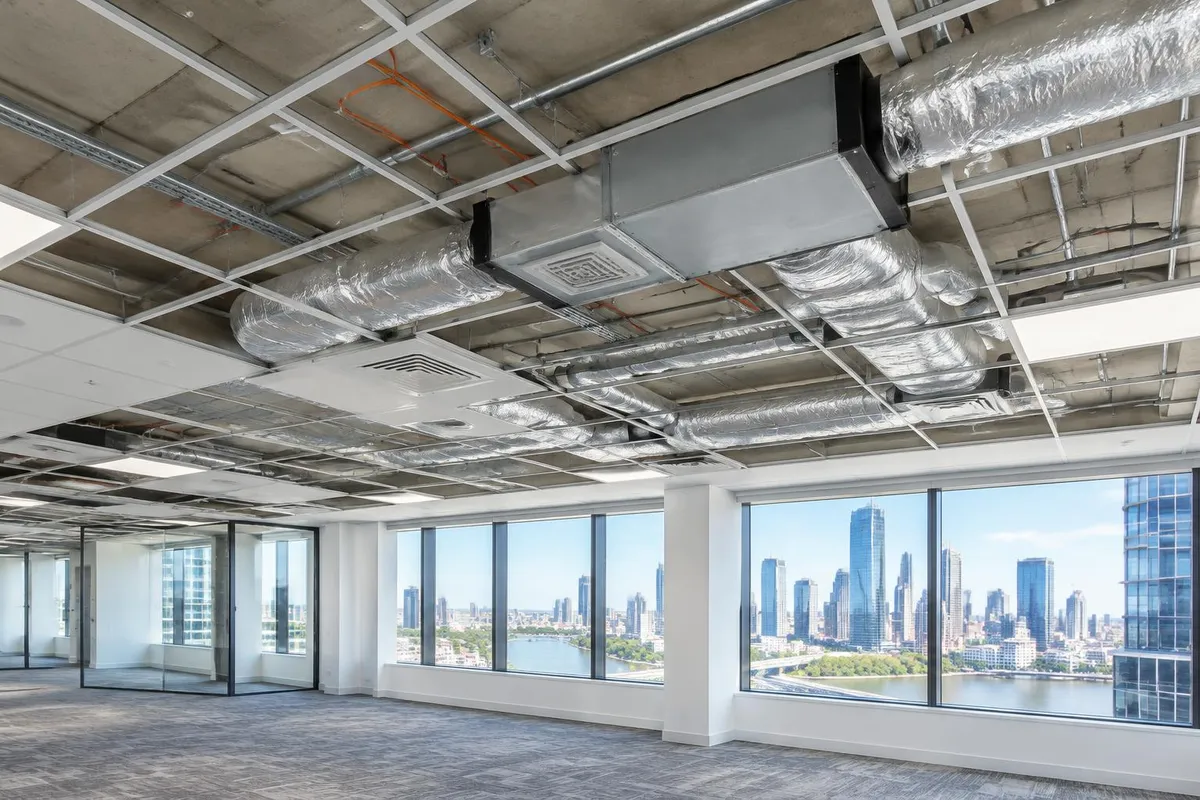
What changes commercial air conditioning costs in Brisbane?
Start with a documented brief: room use, operating hours, comfort problems and what the tenancy is expected to look like after the work. Required cooling capacity comes from heat loads and operating conditions. Two rooms with the same floor area can need different equipment because of glazing, occupancy, outdoor air and internal heat gains.
Equipment cost is only one part of the budget. Ask whether the quotation includes indoor and outdoor units, mounting, pipework, insulation, condensate drainage, ductwork, controls and electrical work. Identify who is responsible for any landlord or building-services interfaces before agreeing to the price.
- Number of separately controlled rooms and indoor units.
- Pipe and duct routes, ceiling clearance and safe service access.
- Electrical supply, switchboard capacity and any required upgrades.
- Roof access, lifting equipment, structural supports and penetrations.
- After-hours staging, demolition and existing equipment removal.
Explore commercial air conditioning services in Brisbane and Moreton Bay, or see air conditioning installation in brisbane.
Replacement is not automatically like-for-like
An existing unit's nameplate is a useful starting point, not a new design brief. A change from a quiet office to a busy consulting room, extra computers or a new glazed partition can alter loads and air distribution. Existing cables, pipework, drains and brackets also need an assessment before reuse.
A replacement quote should state what will be reused, what will be replaced and the condition checks required. If hidden defects are found after opening a ceiling, the quotation should explain the variation process rather than leave the customer guessing. Hazardous materials or restricted access need separate planning; do not assume they are included in a standard installation.
Keep ventilation and approvals in the budget
An ordinary wall split generally recirculates air; its cooling capacity does not establish whether a tenancy has adequate outdoor-air ventilation. Outdoor-air supply, exhaust and any kitchen make-up air must be considered separately. These requirements can affect both cooling loads and the building works needed.
Ask the landlord or building manager which plant, duct routes, roof spaces and electrical systems belong to the building. Applicable building requirements and approval pathways depend on the property and proposed work. A certifier or appropriately qualified designer can clarify the project's obligations; this guide does not replace that assessment.
Planning work at your premises?
Send your address, equipment details and operating hours so suitability and scope can be confirmed.
Compare quotations line by line
Request an equipment schedule with model identifiers, selected capacities and control arrangements. Check that quotations use the same room layout, occupancy assumptions and scope. A lower total may exclude electrical work, access equipment, ventilation, controls or commissioning rather than represent a more efficient installation.
Confirm whether GST is included and how payment stages, exclusions and variations are handled. Ask for the warranty terms and the maintenance conditions for the selected equipment. Clarify who carries the design responsibility and who will coordinate subcontracted electrical, building or specialist mechanical work.
- Equipment models and design assumptions.
- Included installation work and explicitly excluded work.
- Access, approvals and landlord coordination responsibilities.
- Commissioning, balancing, user training and handover records.
- Warranty terms, service access and future maintenance scope.
Look beyond the upfront price
Operating hours, controls, maintenance access and room zoning affect ownership cost. A unit that is difficult to access may cost more to maintain even if the initial equipment price is attractive. Poorly coordinated schedules can keep an empty tenancy running after closing time.
Compare running-cost estimates only when their assumptions are stated: operating hours, electricity tariff, expected load and included fans or pumps. Rated cooling capacity in kilowatts is not the same as electrical consumption. Avoid accepting a percentage saving or payback period without a clear baseline and a site-specific calculation.
Prepare for a commercial quote
Send the site address, floor plan, opening hours, existing model details and any recent service reports. Note whether the job is a replacement, fit-out or staged upgrade. Include known access restrictions and the landlord's requirements so the team can confirm the appropriate assessment and project scope.
Residential supplied-and-installed split prices cover particular standard installation assumptions. They are not fixed commercial fit-out prices. Hart Air can discuss your premises and confirm suitability and availability; larger specialist-system work needs its scope agreed before it is quoted.
Questions to use when comparing commercial quotations
| Cost item | Ask the contractor |
|---|---|
| Equipment | Which models, capacities and zones are included? |
| Building services | Are electrical, ventilation and landlord interfaces included? |
| Access | Who provides lifting, roof access and after-hours staging? |
| Handover | Are balancing, commissioning and operating instructions included? |
Before you repair, replace or upgrade
Check who is responsible under the lease
Commercial leases often set out who arranges servicing, repairs and replacement. The Queensland Small Business Commissioner's repairs and maintenance guidance explains how these obligations are commonly allocated between landlord and tenant.
Repair or replace older equipment
Weigh the fault, equipment age, repeat breakdowns, parts availability and running costs. Older systems using R22 refrigerant, an ozone-depleting gas, need particular care: refrigerants are not automatically interchangeable, and gas must be recovered rather than released.
Confirm licensed refrigerant work
Refrigerant handling requires appropriate Australian Refrigeration Council authorisation, and some installation scopes need a QBCC licence. Ask for licence details before work is booked. See our guide to choosing a commercial AC contractor.
Plan around trading hours
Tell us your opening hours, critical rooms and access restrictions so inspections, servicing or changeovers in Brisbane can be scheduled with minimal disruption. Read the commercial maintenance schedule guide.
Frequently asked questions
Official references
- National Construction Code — building requirements
- QBCC — mechanical services licence scope (limited design)
General planning information, not a site-specific design, compliance determination or fixed quote. Confirm current requirements with the responsible building professionals and equipment instructions.
Related commercial guides
- Commercial Air Conditioning: VRF vs Ducted vs Split
Compare commercial air conditioning options: VRF, ducted and split systems, zoning, ventilation and access.
- Office Air Conditioning Sizing Brisbane
Office air conditioning sizing in Brisbane: understand heat loads, glazing, occupancy, zoning and ventilation.
- Choosing a Commercial Air Conditioning Contractor in Queensland
Choose a commercial air conditioning contractor in Queensland: check licence scope, design responsibility, quotes and handover.
Discuss your commercial air conditioning project
Tell Hart Air about your premises, existing system and proposed work. Attendance and specialist-system scope are confirmed before booking.