
Air Conditioning Permits & Brisbane Council Requirements (2025 Guide)
Understand Brisbane City Council and Moreton Bay permit requirements for air conditioning installation — noise rules, body corporate approvals and compliance essentials.

- ARCtick licenceL117206
- Refrigerant tradingAU57185
- Electrical licence146856
- Blue card2591853-1
- Public liability$10M cover
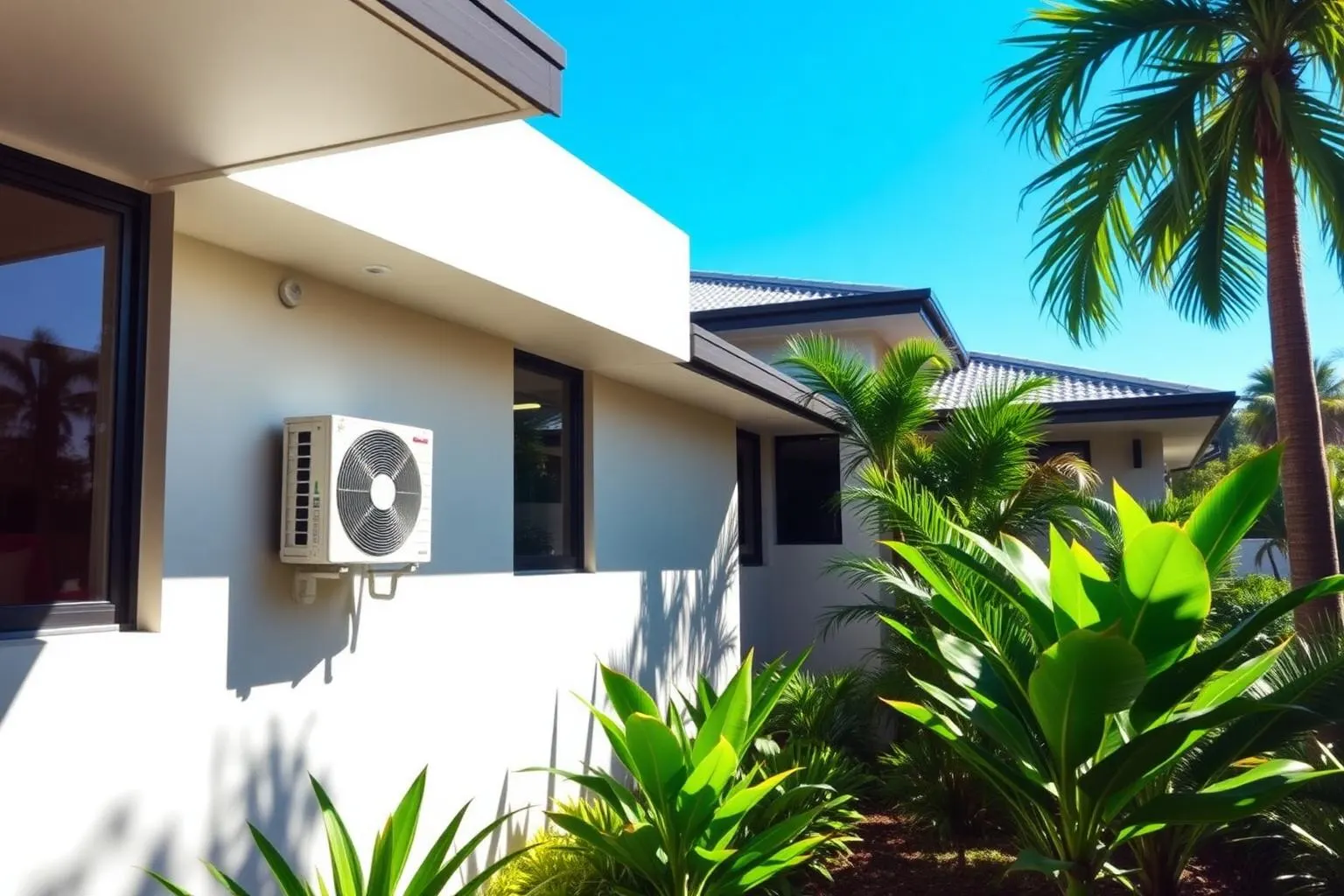
If you are planning to upgrade your home’s cooling throughout the sweltering Queensland summer, you are likely wondering if you need air conditioning permits from Brisbane Council first. For most standard residential installations on modern, standalone homes, formal council building permits are not required.
However, do not mistake a lack of paperwork for a lack of rules. Every single installation must strictly comply with Brisbane’s noise restrictions, environmental protection laws, heritage overlays, and body corporate guidelines.
Failing to meet these strict compliance standards can lead to costly fines, mandatory unit relocations, or voided property insurance. We have created this comprehensive guide to demystify local regulations so your next installation goes smoothly.
Need a trusted, 100% compliant air conditioning installation for your home or business? Call Hart Air today on 0450 313 517 or request a quote online.
Do I Need Air Conditioning Permits from Brisbane Council?
While the actual act of installing a condenser outside your house usually bypasses the need for a formal development application, the regulations that surround it are surprisingly rigid. Brisbane City Council categorises standard residential air conditioners similarly to minor structural inclusions.
Provided your property falls outside specific zoning overlays (like heritage or traditional building character zones), you do not need to formally apply for an air conditioning permit.
However, your installation must abide by statutory noise limits and correct siting. If an inspector deems your system non-compliant after a neighbour complaint, you will bear the cost of adjusting the unit. Whether you require a split system installation or are looking at a comprehensive ducted air conditioning setup, choosing a licensed installer who understands local council provisions is your best defence against future headaches.
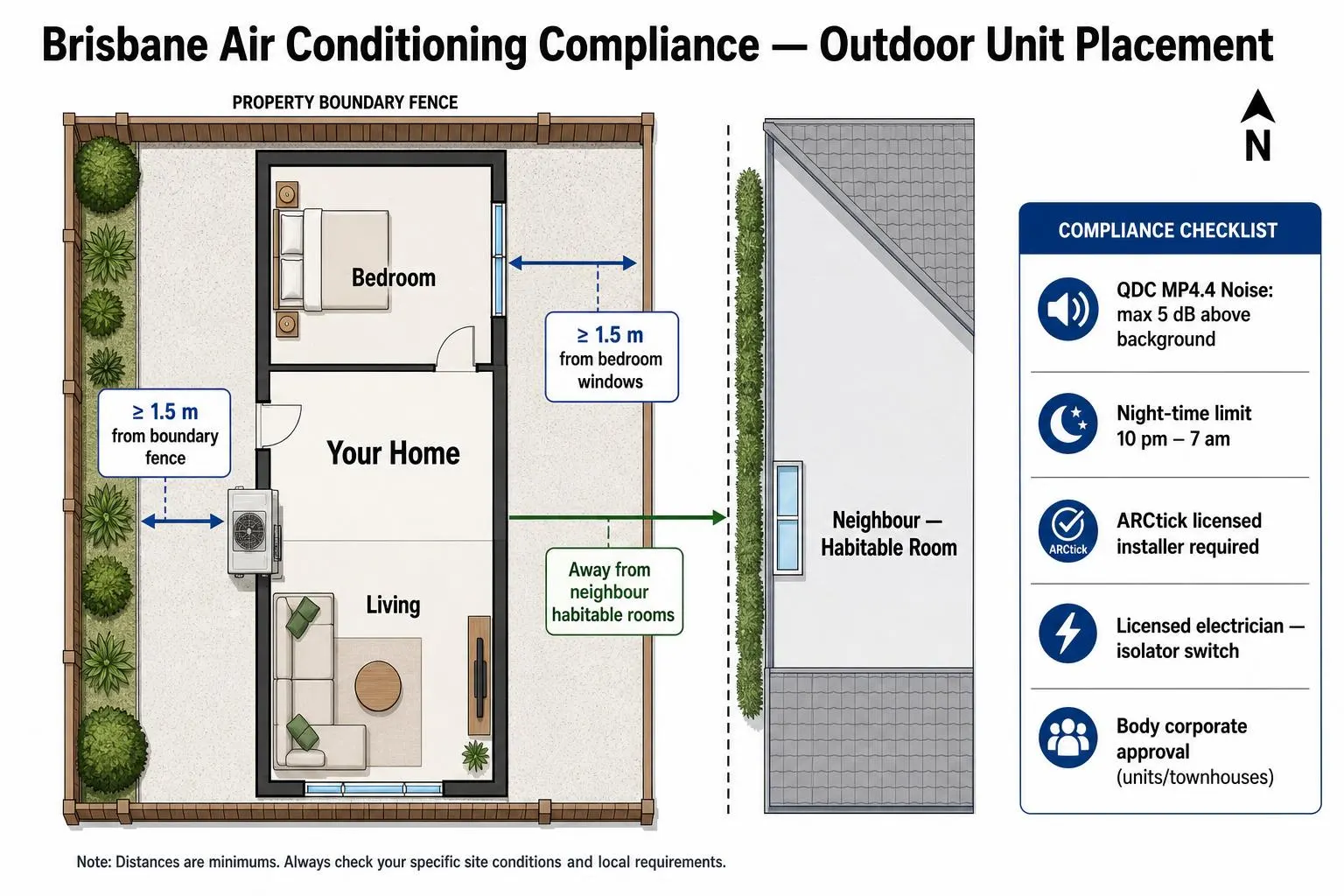
Brisbane Council AC Compliance Diagram
Brisbane City Council Noise Regulations for Air Conditioners
The single most common reason homeowners run into trouble with local authorities is noise. Under the Queensland Environmental Protection Act 1994, air conditioning units are classified as 'stationary noise sources'. The local council actively enforces boundaries and limits to protect neighbourhood peace.
The Decibel Limits
- Daytime (7am – 10pm)
The continuous noise emitted by your outdoor unit cannot exceed 5 decibels (dB(A)) above the background noise level at the boundary of the affected adjoining property.
- Nighttime (10pm – 7am)
The tolerance is stricter; the noise must not exceed 3 decibels (dB(A)) above background limits.
Modern inverter compressors are generally quiet, but placing a large multizone compressor directly facing your neighbour’s bedroom window on a narrow block is a recipe for a noise complaint. Experienced installers will properly mount units on vibration-damping rubber pads and utilise distance, fences, or acoustic baffles to guarantee compliance.
Navigating Heritage and Character Housing Zones
Brisbane is renowned for its classic timber Queenslanders and workers' cottages. Consequently, large suburbs are protected under "Traditional Building Character" or "Heritage" overlays. If your home sits in one of these zones, simply attaching a large, unsightly condenser to the street-facing verandah could violate local planning schemes.
In these districts, exterior alterations that impact the visual streetscape must either be hidden from view or strategically screened. If a unit must be visible from the street on a heritage-listed home, you may be required to submit an application.
Property owners should review the official Brisbane City Council – Laws and permits portal or speak to an urban planner to verify if a minor work exemption applies to their address.
Plumbing, Drainage and Strata Council Approvals
Air conditioners extract significant amounts of humidity from the air, meaning your system generates condensation that must drain away. Directing an air conditioner drain pipe so that it pools on public footpaths or creates a damp hazard on a neighbour's fence line is illegal and will result in a council order.
Furthermore, in large commercial settings or specific high-density residential complexes, tying into the primary drainage systems might push the project into a regulated space. Depending on the complexity, this might fall under requirements outlined on the ABLIS Plumbing and drainage work permit registry for Brisbane City Council.
Body Corporate Considerations If you live in a townhouse, apartment, or strata-titled property, council laws take a backseat to Body Corporate by-laws. You almost always need written approval from the Body Corporate committee before installing an air conditioner.
This is because drilling through an external wall constitutes altering "common property", and placing a unit on a balcony changes the building's exterior aesthetic.
Unpermitted Work: Fines and Legal Risks in QLD
Choosing to cut corners, ignore acoustic limits, or hire a handy neighbour instead of a professional tradesperson exposes you to severe legal risks. Local councils in Queensland take unauthorized works seriously.
Council enforcement notices generally begin with a request to show cause or rectify the issue. Ignoring these can trigger on-the-spot fines ranging from $1,000 for minor residential infringements up to $12,000+ for severe health, safety, or environmental risks.
Additionally, works completed by unlicensed individuals immediately void the equipment manufacturer's warranty and can result in your home or landlord insurance refusing to pay out in the event of an electrical fire.
For safe, complaint services you can trust, you should only seek out experts holding valid air conditioning installation Brisbane qualifications.
Mandatory Licensing: ARCtick & QBCC Standards
While a direct building permit for the physical box isn't normally necessary, the person carrying out the installation is legally required to hold specific, government-issued licenses. Without these, your installation is automatically deemed illegal in Queensland, regardless of how neatly it was fitted.
- QBCC Electrical Licence
Connecting a new circuit to your switchboard is strictly regulated. A Queensland Building and Construction Commission licensed sparky must handle the high-voltage setup and issue an electrical safety certificate upon completion.
- ARCtick Refrigerant Handling Licence
The federal government mandates that any tradesperson handling the ozone-depleting and synthetic greenhouse gases inside an AC system must possess a valid ARCtick licence.
At Hart Air, our team is fully licensed, insured, and deeply knowledgeable regarding local governance. You can explore our full range of compliant air conditioning services to ensure your property remains comfortable, safe, and entirely legal.
Frequently Asked Questions
Don’t risk fines, noise complaints, or voided warranties by cutting corners on your HVAC setup. At Hart Air Conditioning & Refrigeration, we ensure every aspect of your project meets QLD laws, electrical safety standards, and local ordinances.
For professional, compliant service, call us direct on 0450 313 517 or contact our team online to book your installation today.
Trusted across Brisbane & Moreton Bay
- 15+Years experience
- 5.0★Google rated
- Same DayResponse
- 100%Licensed & insured

Request a free quote
Ready to upgrade your home cooling or commercial refrigeration system? Brisbane’s trusted air conditioning and refrigeration team will be in touch the same business day.