
How to Keep Your House Cool in Summer in Australia

Aug 13, 2025 | Guides | 0 comments

How to Keep Your House Cool in Summer: The Complete Australian Guide

Australian summers can be brutal, with soaring temperatures that turn homes into furnaces and send energy bills through the roof. If you’re wondering how to keep your house cool in summer without breaking the bank, you’re not alone. With 7.2 million Australian households adopting energy-saving habits this summer and electricity prices rising 37% in recent years, finding effective cooling solutions has never been more important.

This comprehensive guide reveals proven strategies to keep your home comfortable during Australia’s scorching summers, from passive cooling techniques that cost nothing to smart air conditioning choices that maximise efficiency. Whether you’re battling the dry heat of Adelaide or the humid conditions of Brisbane, we’ll show you exactly how to beat the heat while keeping your energy bills manageable. You’ll discover which cooling methods work best in your climate zone, how to prepare your home for summer, and when to choose evaporative cooling over air conditioning.

Understanding Australian Summer Cooling Challenges

Australia’s diverse climate zones create unique cooling challenges that vary dramatically across the continent. From the tropical humidity of Darwin to the dry heat of inland New South Wales, understanding your local climate is the first step in developing an effective cooling strategy.

Climate Zones and Regional Variations

Australia’s eight climate zones each require different approaches to summer cooling. Hot, dry climates like Adelaide benefit most from evaporative cooling, while humid coastal areas like Sydney require different solutions. The 2023-24 summer was Australia’s third warmest on record, highlighting the increasing need for effective home cooling strategies.

In hot, humid zones like Brisbane and Darwin, evaporative cooling becomes less effective when humidity exceeds 70%. These areas require refrigerative air conditioning or strategic passive cooling techniques. Meanwhile, Perth and Adelaide’s dry summers make them ideal for evaporative cooling systems, which can use up to 82% less energy than traditional air conditioning.

Inland areas experience extreme temperature variations between day and night, creating opportunities for night purge cooling strategies. Coastal regions benefit from natural sea breezes but must manage higher humidity levels that can make passive cooling less effective.

How to Keep Your House Cool in Summer in Australia 1

Comparison of average monthly electricity costs for cooling across Australian states

Energy Costs and Efficiency Considerations

The financial impact of summer cooling has reached unprecedented levels, with Australians spending an extra $190 million on air conditioning this summer compared to last year. According to energy.gov.au, heating and cooling can account for 20-50% of energy used in Australian homes, depending on your climate zone.

Regional cost variations are significant. Victorian households pay the lowest average monthly electricity costs at $131, while South Australian residents face the highest at $190 per month. This 45% difference reflects varying energy sources, grid infrastructure, and local policies affecting electricity prices.

Energy efficiency becomes crucial when cooling costs can reach $415 annually for reverse-cycle air conditioning, according to Canstar research. However, implementing passive cooling strategies can reduce these costs by up to 40%, and investing in proper insulation, shading, and ventilation is worthwhile for long-term savings.

The average Australian home experiences 15 air changes per hour, meaning the air in your cooled space is being replaced 15 times hourly. This inefficiency, combined with poor thermal performance, explains why cooling costs have become such a significant household expense.

Passive Cooling Strategies That Work

Passive cooling harnesses natural processes to maintain comfortable temperatures without relying heavily on mechanical systems. These strategies form the foundation of effective summer cooling, often eliminating the need for air conditioning altogether or significantly reducing its usage.

Strategic Shading and Window Management

External shading is your most powerful weapon against summer heat. Up to 87% of a home’s heat gain comes through windows, making effective shading critical. External blinds, awnings, and pergolas block heat before it enters your home, proving far more effective than internal coverings.

The key is understanding sun angles throughout the day. North-facing windows receive consistent sun exposure, requiring permanent shading solutions like eaves or awnings. West-facing windows bear the brunt of the afternoon heat and benefit from adjustable external blinds or shade sails. East-facing windows need morning protection, while south-facing windows rarely require summer shading in most Australian locations.

Window film and double glazing provide additional thermal barriers. CSIRO research shows that up to 40% of cooling energy can be lost through windows. Reflective window films reduce heat gain by 10-15 degrees alone, while maintaining natural light levels.

Plant deciduous trees strategically to provide summer shade while allowing winter sun penetration. Large leafy trees positioned on the western side of your property create natural air conditioning, with mature trees capable of cooling surrounding air by several degrees through evapotranspiration.

How to Keep Your House Cool in Summer in Australia 3

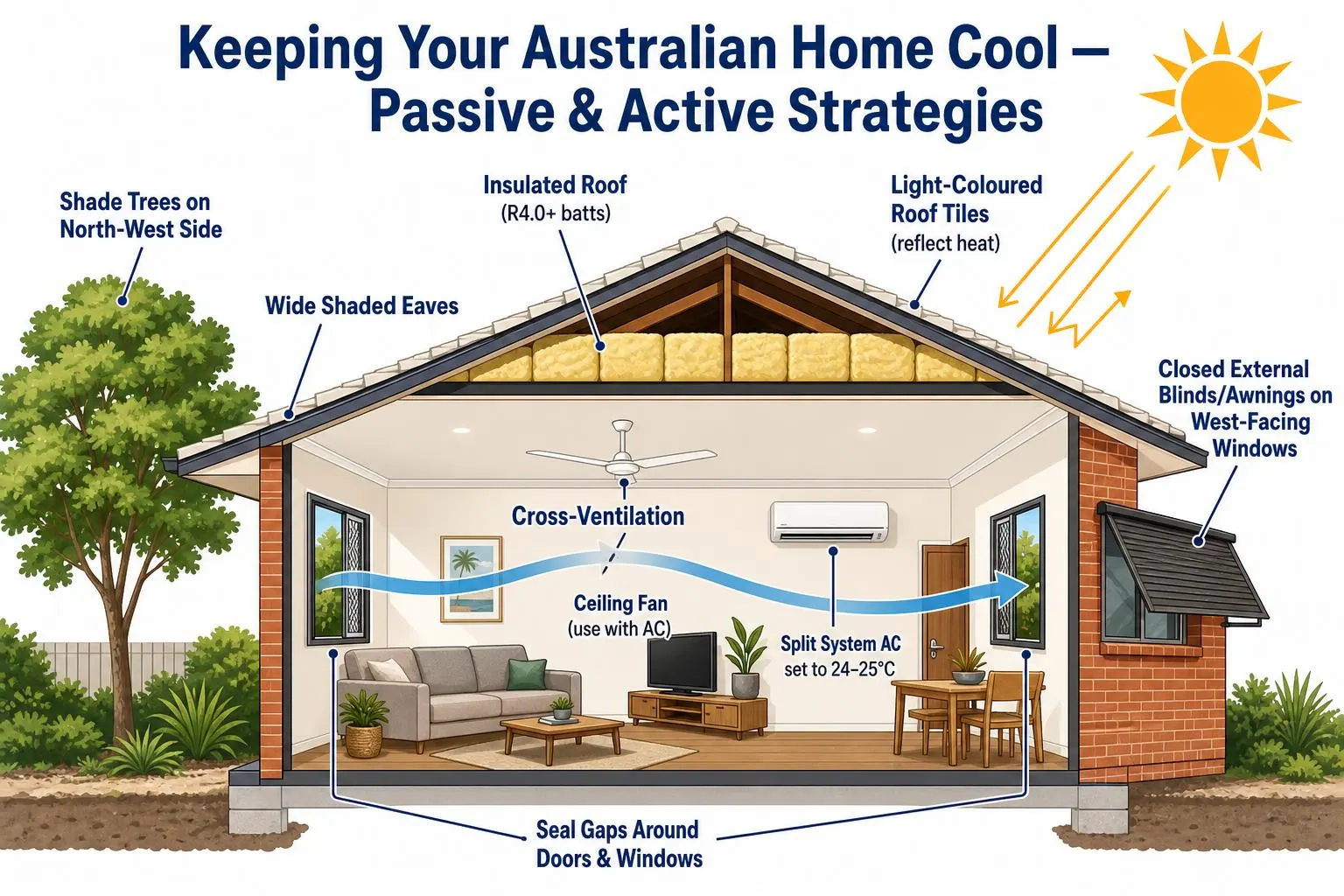
Infographic illustrating key passive cooling strategies for Australian homes, including ventilation and shading techniques

Cross-Ventilation and Natural Airflow

Creating effective cross-ventilation requires understanding airflow principles and your local wind patterns. Natural ventilation works by replacing hot indoor air with cooler outdoor air, but timing and technique are crucial for success.

Position intake openings on the cooler side of your home (typically south-facing) and exhaust openings on the warmer side to create pressure differentials. Stack ventilation utilises the principle that hot air rises, allowing you to draw cool air in at ground level while exhausting hot air through ceiling vents or high windows.

Night purge cooling proves particularly effective in climates with significant day-night temperature variations. Open windows and doors on opposite sides of rooms during cooler evening hours, using fans to enhance air circulation. Close everything before sunrise to trap the cool air inside.

Whole-house fans can dramatically improve natural ventilation. These large fans, typically installed in hallways or stairwells, create powerful air movement throughout your home. When outdoor temperatures drop below indoor levels, they can cool an entire house in minutes while using minimal energy compared to air conditioning.

Thermal Mass and Insulation Principles

Proper insulation is the cornerstone of passive cooling. A fully insulated home can reduce heating and cooling costs by 40-50% compared to an uninsulated property. Focus on ceiling insulation first, as it provides the greatest impact per dollar invested.

Wall insulation becomes increasingly important in extreme climates. R-values should match your climate zone requirements, with northern Australia needing higher ratings than southern regions. Don’t overlook thermal bridges – areas where heat can bypass insulation through structural elements like metal frames or concrete slabs.

Thermal mass works differently in cooling applications than in heating. Materials like concrete, brick, and tile can absorb heat during the day and release it slowly at night. However, thermal mass must be protected from direct summer sun to avoid becoming a heat source rather than a cooling asset.

Earth coupling, where concrete slabs connect directly to stable ground temperatures, provides natural cooling in southern Australian climates. Ground temperatures remain relatively stable year-round, offering a consistent cooling source when properly implemented.

How to Keep Your House Cool in Summer in Australia 5

Cross-section diagram comparing insulated and uninsulated homes showing heat transfer patterns in Australian summer conditions

Active Cooling Solutions: Air Conditioning vs Evaporative Cooling

When passive cooling isn’t sufficient, choosing the right active cooling system makes the difference between comfortable summers and overwhelming energy bills. Understanding when to use reverse-cycle air conditioning versus evaporative cooling depends on your climate, budget, and cooling needs.

Reverse Cycle Air Conditioning Efficiency

Modern reverse-cycle air conditioners are the most energy-efficient combined heating and cooling systems available. Heat pumps, including reverse-cycle units, can achieve 300-600% efficiency by transferring heat rather than generating it. This technology works by absorbing heat from your home and releasing it outdoors, making it highly effective even in extreme temperatures.

The key to efficiency lies in proper sizing and thermostat management. Set your thermostat between 25-27°C in summer to optimise energy use. Every degree lower than 25°C can increase energy consumption by 5-10%, significantly impacting your bills over the summer season.

Inverter technology revolutionises air conditioning efficiency. Unlike fixed-speed systems that constantly turn on and off, inverter units adjust their output to maintain consistent temperatures. This results in up to 40% lower energy consumption and eliminates the temperature fluctuations that plague older systems.

Split systems prove most cost-effective for individual rooms or small areas. Single split systems cost $203 to run over summer for cooling-only models, making them the cheapest air conditioning option according to Finder’s 2024 analysis.

Evaporative Cooling: When and Where It Works

Evaporative cooling excels in hot, dry climates where humidity remains below 70%. These systems work by drawing hot air through water-soaked pads, using the natural evaporation process to cool the air by 5-8°C. They’re most effective in Adelaide, Perth, and inland areas where low humidity maximises evaporation rates.

Installation costs are typically lower than ducted air conditioning, and running costs are significantly reduced. Ducted evaporative systems cost 42-56 cents per hour to operate, compared to $2.14-$3.06 for ducted refrigerative air conditioning.

Water usage is a consideration in evaporative cooling. Systems can consume up to 25 litres per hour, depending on fan speed and humidity levels. However, when compared to the water required to generate electricity for air conditioning, evaporative cooling often has a lower total water footprint.

The main limitation occurs during humid conditions or rainy periods when effectiveness drops significantly. Systems struggle when outdoor humidity exceeds 65%, making them unsuitable for use in tropical or coastal areas during humid weather conditions.

Cost Comparison and Energy Savings

Running cost differences between cooling systems can be dramatic. Portable air conditioners are the most expensive, costing $122-$728 per summer depending on your state and system size. Split systems offer the best value, while ducted systems provide whole-house cooling at moderate costs.

System Type Summer Running Cost Best Application
Single Split $203 (cooling-only) Individual rooms
Ducted Evaporative $42-56 per season Dry climate homes
Ducted Refrigerative $214-306 per season Whole house cooling
Portable Unit $122-728 per season Temporary cooling

Fan-assisted cooling provides the most economical option. Fans cost around 4 cents per hour compared to $0.32-$1.87 for air conditioning. Using fans in conjunction with air conditioning allows higher thermostat settings while maintaining comfort, reducing overall energy consumption.

The climate zone significantly impacts cost-effectiveness. Queensland and Northern Territory face the highest running costs due to extended cooling seasons and extreme temperatures. Victorian households enjoy the lowest costs, benefiting from milder summers and cheaper electricity rates.

How to Keep Your House Cool in Summer in Australia 7

Smart Home Preparation and Seasonal Tips

Preparing your home before summer arrives and adopting daily cooling habits can dramatically reduce your reliance on expensive cooling systems. Strategic preparation combined with smart daily practices maximises comfort while minimising energy costs.

Pre-Summer Home Preparation Checklist

Service your cooling systems before the heat arrives. Clean air conditioning filters, check refrigerant levels, and clear outdoor unit surrounds to ensure peak efficiency. Dirty filters can reduce efficiency by up to 30%, while blocked outdoor units struggle to expel heat effectively.

Seal air leaks around doors, windows, and penetrations through walls. Use sealants and draft excluders to prevent cool air from escaping and hot air from entering. Pay particular attention to areas where different building materials meet, as these often create thermal bridges.

Inspect and upgrade your home’s thermal barrier. Check ceiling insulation levels and top up if necessary. Insulation deteriorates over time and may need replacement in older homes. Consider adding reflective foil barriers under metal roofing to reduce radiant heat transfer.

Trim vegetation around outdoor air conditioning units while maintaining some shade. Units need 500mm clearance on all sides for proper airflow, but strategic shading can improve efficiency by keeping the unit cooler during operation.

Daily Cooling Habits That Make a Difference

Timing your daily activities around temperature patterns maximises natural cooling opportunities. Close curtains and blinds before the sun hits windows to prevent heat gain throughout the day. Use internal thermal curtains or cellular blinds for additional insulation.

Minimise heat-generating activities during peak temperature periods. Avoid using ovens on hot days and shift cooking to early morning or evening hours. Use outdoor barbecues, microwaves, or slow cookers that generate less ambient heat.

Strategic appliance use reduces internal heat loads. Replace incandescent bulbs with LEDs, which produce 75% less heat. Hang clothes outside to dry rather than using hot clothes dryers that pump warm, humid air into your home.

Create cross-breezes by opening windows on opposite sides of rooms during cooler periods. Use portable fans to enhance air movement, positioning them to draw cool air in from shaded areas while exhausting warm air from heated spaces.

Night-Time Cooling Strategies

Night purge cooling can reduce daytime cooling loads by several degrees. Open windows during cooler evening hours to flush hot air from your home’s thermal mass. Use fans to accelerate this process, but remember to close everything before outdoor temperatures start rising.

Sleep positioning affects comfort without energy costs. Keep bedrooms cool by blocking afternoon sun with blinds or curtains. Move sleeping areas to lower floors where possible, as hot air naturally rises to upper levels.

Optimise bedroom cooling for better sleep quality. Use ceiling fans set to rotate counter-clockwise to create downward airflow. Position a small fan at the foot of your bed on low speed to maintain air circulation without creating drafts or noise that disrupts sleep.

Consider traditional cooling methods for personal comfort. Damp towels, cold packs, or even frozen water bottles can provide targeted cooling with minimal energy use. These techniques prove particularly effective for vulnerable household members during extreme heat events.

How to Keep Your House Cool in Summer in Australia 9

Budget-Friendly DIY Cooling Solutions

Effective cooling doesn’t require expensive installations. Strategic DIY improvements and smart use of existing fixtures can significantly improve your home’s comfort while keeping costs minimal.

Ceiling Fan Optimisation

Proper ceiling fan setup can make rooms feel 3-8 degrees cooler. Set fans to rotate counter-clockwise in summer to push air directly down, creating a cooling breeze effect. This simple directional change can eliminate the need for air conditioning in mild conditions.

Fan blade angle and speed settings impact effectiveness and energy consumption. Run fans on high speed during hot weather but reduce to low when the room is occupied to balance airflow with noise levels. Fans can be combined with air conditioning to achieve comfort at higher thermostat settings, reducing overall energy use.

Strategic fan placement amplifies natural ventilation. Position portable fans in windows during cooler periods to draw outdoor air inside while exhausting hot air from opposite openings. Window fans should pull cool night air in from shaded sides of your home while pushing hot air out from sun-exposed areas.

Consider whole-house fans for properties with suitable layouts. These powerful units can cool entire homes in minutes during favourable outdoor conditions, using a fraction of the energy required for air conditioning.

DIY Insulation and Sealing Tips

Reflective window film installation provides immediate heat reduction benefits. Reflectix or similar products can be cut to fit windows and secured with removable tape. This simple upgrade can reduce room temperatures by 10-15 degrees while maintaining natural light.

Weather stripping and caulking represent high-impact, low-cost improvements. Seal gaps around doors and windows using foam strips or caulk guns. Focus on areas where you can feel air movement, as these represent the largest energy losses.

DIY draft stoppers cost under $20 but provide significant benefits. Create door snakes using fabric tubes filled with rice or sand, or purchase commercial options designed for external doors. These prevent heated air from entering during the day and cool air from escaping when air conditioning operates.

Attic ventilation improvements can be DIY projects in many homes. Install whirlybirds or ridge vents to allow hot air to escape from roof spaces, reducing the thermal load on ceiling insulation. Ensure intake vents under eaves provide adequate airflow for these exhaust systems to work effectively.

Landscaping for Natural Cooling

Strategic tree placement provides long-term cooling benefits. Plant deciduous trees on the western side of your property to block intense afternoon sun while allowing winter sunlight penetration. Mature trees can cool surrounding air by several degrees through evapotranspiration while providing shade for outdoor living areas.

Create microclimates using vegetation and water features. Plant vegetation near windows and walls to provide natural shading and cooling through transpiration. Even potted plants positioned strategically can improve local air quality and provide minor cooling effects.

Ground cover selection impacts heat reflection around your home. Replace dark surfaces like asphalt or concrete with lighter colored materials or vegetation. Grass and ground cover plants absorb less heat than hard surfaces while providing evapotranspiration cooling.

Water features provide localised cooling through evaporation. Small fountains, ponds, or even shallow water containers positioned in courtyards or near outdoor living areas can reduce local air temperatures by 2-3 degrees while creating pleasant environments for relaxation during cooler evening hours.

Quick Takeaways

  • Passive cooling strategies can reduce cooling costs by 40-50% through strategic shading, cross-ventilation, and proper insulation
  • Set air conditioning between 25-27°C to optimise efficiency – every degree cooler increases energy use by 5-10%
  • External shading blocks up to 87% of heat gain through windows and proves more effective than internal coverings
  • Evaporative cooling works best in dry climates where humidity stays below 70%, using 82% less energy than refrigerative systems
  • Night purge cooling during cooler evening hours can reduce daytime cooling loads by flushing hot air from thermal mass
  • Ceiling fans rotating counter-clockwise create downdrafts that make rooms feel 3-8 degrees cooler
  • Pre-summer preparation, including system servicing and air leak sealing, maximises cooling efficiency and reduces breakdowns

Conclusion

Keeping your house cool during Australian summers doesn’t have to drain your wallet or compromise your comfort. By combining passive cooling strategies with smart active cooling choices, you can create a comfortable home environment while managing energy costs effectively. The key is understanding your local climate conditions and implementing solutions that work synergistically rather than relying on a single approach.

Start with the fundamentals: proper shading, adequate insulation, and strategic ventilation form the foundation of effective summer cooling. These passive strategies often eliminate the need for mechanical cooling altogether during mild conditions and significantly reduce energy consumption when air conditioning becomes necessary. Remember that a fully insulated home can reduce cooling costs by 40-50%, making these improvements some of the best investments you can make.

When active cooling is required, choose systems appropriate for your climate zone and cooling needs. Evaporative cooling excels in dry conditions while reverse-cycle air conditioning provides consistent comfort in humid climates. The most efficient approach combines multiple strategies – using fans with air conditioning, implementing night purge cooling, and maintaining proper equipment. With electricity prices continuing to rise and summers becoming increasingly intense, taking action now will pay dividends in comfort and cost savings for years to come.

Frequently Asked Questions

What is the most cost-effective way to cool a house in Australia?

The most cost-effective cooling combines passive strategies with targeted active cooling. External shading, proper insulation, and ceiling fans provide the foundation, while evaporative cooling works best in dry climates and split-system air conditioning suits humid areas. Fans cost only 4 cents per hour compared to $0.32-$1.87 for air conditioning.

Should I use evaporative cooling or air conditioning in my Australian home?

Choose evaporative cooling in hot, dry climates where humidity stays below 70% (Adelaide, Perth, inland areas). It uses 82% less energy than refrigerative systems. Use reverse-cycle air conditioning in humid coastal areas or where precise temperature control is needed. Consider your climate zone, budget, and cooling needs when deciding.

How can I reduce my summer electricity bill while staying cool?

Set air conditioning to 25-27°C (each degree cooler increases costs 5-10%), use ceiling fans to feel cooler at higher temperatures, implement external shading to block up to 87% of heat gain, seal air leaks, and use night purge cooling during cooler hours. Proper insulation can reduce cooling costs by 40-50%.

What are the best passive cooling techniques for Australian homes?

External shading (awnings, blinds, trees) blocks heat before it enters, cross-ventilation using strategic window placement creates natural airflow, proper ceiling and wall insulation reduces heat transfer, and night purge cooling uses cool evening air to reduce daytime loads. These techniques work together to minimise mechanical cooling needs.

When should I prepare my home for summer cooling?

Prepare before temperatures rise in early spring. Service air conditioning systems, clean filters, seal air leaks around doors and windows, check and upgrade insulation, install or repair external shading, and trim vegetation around outdoor units. This preparation prevents costly breakdowns and maximises efficiency during peak summer.


We’d love to hear about your cooling experiences! What strategies have worked best in your home? Have you tried evaporative cooling or invested in better insulation? Share your summer cooling tips and challenges in the comments below – your experience could help fellow Australians beat the heat more effectively.

Found this guide helpful? Share it with friends and family who are struggling with hot homes and high energy bills. Together, we can help more Australians stay cool and comfortable without breaking the bank. What’s your biggest summer cooling challenge – high electricity bills, ineffective systems, or finding the right solution for your climate zone?

References